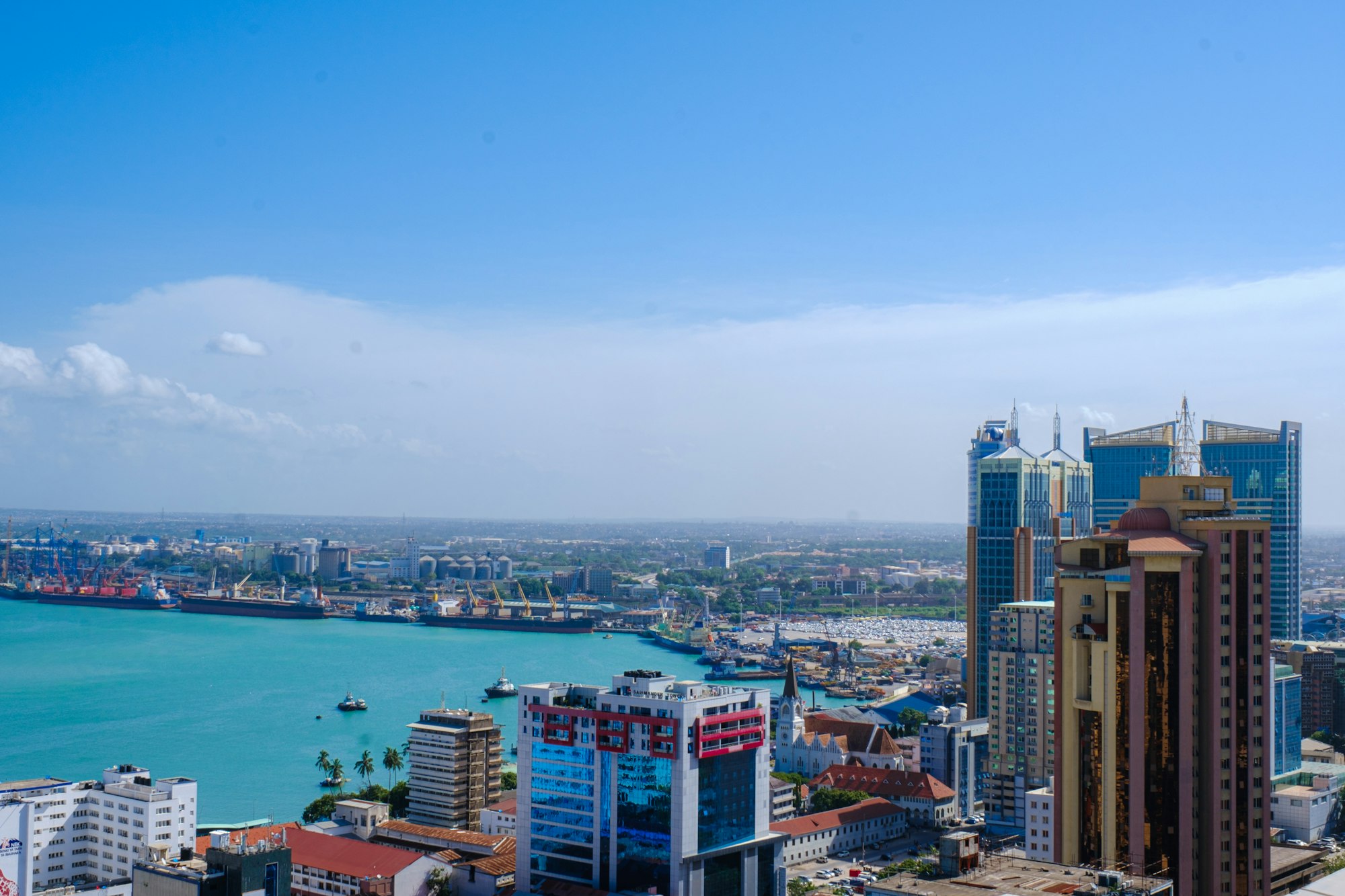
When Kenya launched its derivatives platform in 2019, the project carried two ambitions at once. The first was modest: give domestic investors a single instrument, the Single Stock Future, with which to hedge or gain leveraged exposure to a handful of NSE 20 names. The second was strategic: establish the regulatory, clearing, and market-maker infrastructure that a real derivatives venue requires, so that future product expansion could happen on top of that foundation rather than starting from scratch. Six years in, the second ambition is the one that mattered.
NSE NEXT today is at an inflection. The Single Stock Futures book has matured. The venue’s designated market maker has built credible visible liquidity. Turnover has grown materially. CMA Kenya has approved the next product class, Options on Single Stock Futures, and NSE Clear has the margining methodology in place. The venue is about to stop being a futures-only market and become a real derivatives platform. This post is a chronicle of how it got here and a look at what the OSF transition actually changes.
Why Kenya needed a derivatives venue
For most of its history, the Nairobi Securities Exchange was a cash equity market and nothing else. Investors who wanted to hedge equity exposure had to do it offshore, through structured products at international banks, or not at all. Corporates that wanted to hedge currency or sector exposures had similar problems. The absence of a domestic derivatives market was not an oversight; it was a known gap that the exchange, the regulator, and the broker community had been discussing for at least a decade before the venue actually launched.
The mid-2010s were when the pieces lined up. The NSE went public in 2014, which gave it the capital and institutional standing to build infrastructure that did not yet have customers. CMA Kenya issued the derivatives regulations under which the venue would operate. NSE Clear was incorporated as the central counterparty. By 2018 the legal, technical, and regulatory architecture was in place. By mid-2019 the first SSF contracts traded.
The SSF Era, 2019 to 2024
NSE NEXT launched with Single Stock Futures on a handful of the most liquid NSE 20 constituents. Safaricom, the banks, and EABL were the natural anchors because they had the cash market depth to support derivatives pricing. Contract specifications were standardized: lot sizes large enough to be institutional but small enough to be tradeable, expiries on a quarterly cycle, cash settlement against a closing reference. The product set was deliberately narrow. Better one product that worked than five products that did not.
The appointed market-maker mandate
A new derivatives venue with no existing book needs a market maker on day one. NSE NEXT appointed one. The mandate was straightforward: continuous two-sided quoting on the listed SSF contracts, within specified maximum spreads and minimum sizes. In return, fee rebates and the visibility of being the first algorithmic provider on the venue. In practice this is the work that decides whether a derivatives venue ever gets off the ground. Without a market maker, the order book is empty, no one trades, no one quotes, and the venue dies. With one, even a thin venue functions.
The slow grind to volume
The first three years of any new derivatives market are slow. NSE NEXT was no exception. Volumes in 2019 and 2020 were small. COVID disrupted the first attempt to build institutional flow. The 2021 to 2023 period was when domestic broker desks started routing orders through NEXT regularly, when the first wave of foreign institutional accounts opened, and when end-clients began to understand that an SSF was not an exotic instrument but a standard hedging tool. Volume compounded slowly. Then, between 2024 and 2026, it stopped being slow.
A derivatives venue does not get built by a single launch. It gets built by the unglamorous work of six years of continuous quoting before anyone notices it is working.
The 2025 to 2026 inflection
Several things changed at once. The macro environment created genuine demand for hedging instruments. Domestic institutional balance sheets had grown to a size where unhedged equity exposure stopped being acceptable to risk committees. The broker network had figured out NEXT operationally; opening a derivatives account stopped being friction. CMA Kenya signaled approval of the next product class. And the cumulative effect of years of liquidity provision finally made the book thick enough that institutional fills could happen at acceptable price impact.
In early 2026 the venue printed record monthly turnover, a result of all four of those changes compounding. The number itself is less important than what it represents. A derivatives venue that prints record turnover six years after launch is one that has crossed the operational threshold where it no longer depends on regulatory promotion or single-counterparty flow. It is a venue that institutional participants now treat as a default rather than a curiosity.
Book depth
Continuous quoting over six years has built persistent visible depth on the most active SSF names. Institutional fills no longer routinely move the underlying.
Operational fluency
Broker desks know how to open accounts, clear trades, and reconcile positions on NEXT. Settlement is predictable. The operational story is no longer a barrier.
Regulatory tailwind
CMA Kenya has actively pushed the derivatives expansion. Approvals for OSFs and forward-looking product classes have moved at a pace that surprises observers used to slower African capital-markets timelines.
Domestic demand
Pension funds, insurers, and corporate treasuries have grown into balance sheets where hedging is no longer optional. The demand for derivatives is genuinely there, in a way it was not in 2019.
The OSF moment
Options on Single Stock Futures change the nature of the venue. Where SSFs offer linear exposure, options offer non-linear exposure: convexity, asymmetric payoffs, volatility trades, defined-risk structures. The participants who use options are different from the participants who use futures, and they use them for different reasons. Corporates hedging earnings volatility look at options. Funds running structured products look at options. Sophisticated retail platforms eventually offer options. The OSF rollout is, in effect, a participant-expansion event for the venue.
Options also expand the universe of strategies the existing SSF participants can execute. A long SSF position with a protective put becomes a tradeable covered structure. A short SSF position can be neutralized through a long call. Volatility traders can take views on implied versus realized vol. None of these are exotic strategies in deep markets. All of them are unavailable on NEXT until OSFs list.
The operational requirements for an options market are not the same as for a futures market. Options need a vol surface, not just a price. Options need Greeks management, not just position limits. Options need an algorithmic market maker, not just an appointed one. The infrastructure question for NSE NEXT in 2026 is whether the options book launches with the operational standard that mature options venues require, or whether it launches without it and accepts the cost of that compromise.
What the next five years look like
The five-year outlook for NSE NEXT depends on how the OSF launch goes. The optimistic case is the conventional path: options list, an algorithmic market maker provides credible two-sided quoting, institutional participants extend their derivatives usage from linear to non-linear, volume on both the futures and options books grows, the venue becomes a real regional derivatives platform. East Africa gets a credible derivatives market for the first time, and Nairobi becomes the natural place to list it.
The pessimistic case is the path where options list without the operational infrastructure to support them. Spreads stay wide. Institutional participants try the product, get disappointed, and route their hedging needs offshore again. The futures book continues to grow but the options book sits as a regulatory artifact rather than a working market. The venue does not die; it just remains less than it could be.
Which case happens is operational, not strategic. The strategic decision was made years ago, when CMA Kenya and NSE committed to building a derivatives venue and an appointed market maker stepped in to seed the SSF book. What remains is execution, and execution depends on which providers, regulators, and infrastructure participants show up to do the work the next phase requires.
Where Shabba sits
Engaged with NSE and CMA Kenya on the OSF licensing pathway
Shabba is engaged with the Nairobi Securities Exchange and the Capital Markets Authority of Kenya on the licensing pathway for Options on Single Stock Futures. A separate, ring-fenced Kenyan operating entity will hold the eventual licenses. Operations on NSE NEXT remain pending regulatory authorization. This post chronicles the venue, not active trading activity.
NSE NEXT spent six years becoming a working futures market. The next phase is whether it becomes a working options market. Both are possible. Neither is automatic.